Civic Issues Tracker Interface
Mobile-first Civic Reporting Platform

Civic Issues Tracker

A cross-platform ecosystem designed to empower citizens by automating civic reporting through geospatial submissions and real-time status tracking.

RoleFull-Stack Developer (Team Project)
TypeAndroid + Web
Core StackJava + Firebase
StatusLive
Location-based reports Realtime tracking Citizen transparency

Civic Problems Were Invisible and Fragmented

Residents often struggled to report local issues in a structured and traceable way, while officials lacked a simple view of what was happening across communities. I built Civic Issues Tracker to close that gap with transparent, location-aware reporting.

Turning Daily Problems into Actionable Reports

Geo-Tagged Reporting

Created a location-aware reporting flow so citizens can submit issues with exact context and map visibility for faster understanding.

Transparent Workflows

Designed a reporting lifecycle that keeps state updates visible as issues move from submission to working status to resolution.

Community Visibility

Built a public-facing view where people can see issue patterns, current statuses, and local problem trends in a single place.

Operational Clarity

Used Firebase-driven updates to keep data fresh, accessible, and easy to monitor across devices without added operational complexity.

Engineering Challenges & Tradeoffs

Realtime Sync

Firebase Realtime Data vs Custom Backend

Selected Firebase for rapid, real-time updates and reliable live state syncing so community reports remain current without heavy infrastructure overhead.

Fast MVP Delivery
Mobile UX

Native Android-first UX vs Web-only Experience

Built with Android-first responsiveness and a simplified web companion, balancing accessibility and quick deployment for local civic use.

Broader Citizen Reach

System Architecture

Mobile Frontend

Android app with Java-based UI and direct integration for issue submission, status viewing, and community interaction.

Web Companion

Responsive web layer for broader accessibility and quick issue tracking from non-native environments.

Data Layer

Firebase provides authentication, storage, and real-time issue updates so new reports and status changes sync instantly.

Reporting Flow

Issues move from submission → location validation → assignment/status updates → completion tracking, creating a transparent lifecycle.

Comprehensive Platform Capabilities

Civic issue reporting interface

Citizen Reporting Flow

Submit civic issues with contextual details and visibility into progress from submission to resolution.

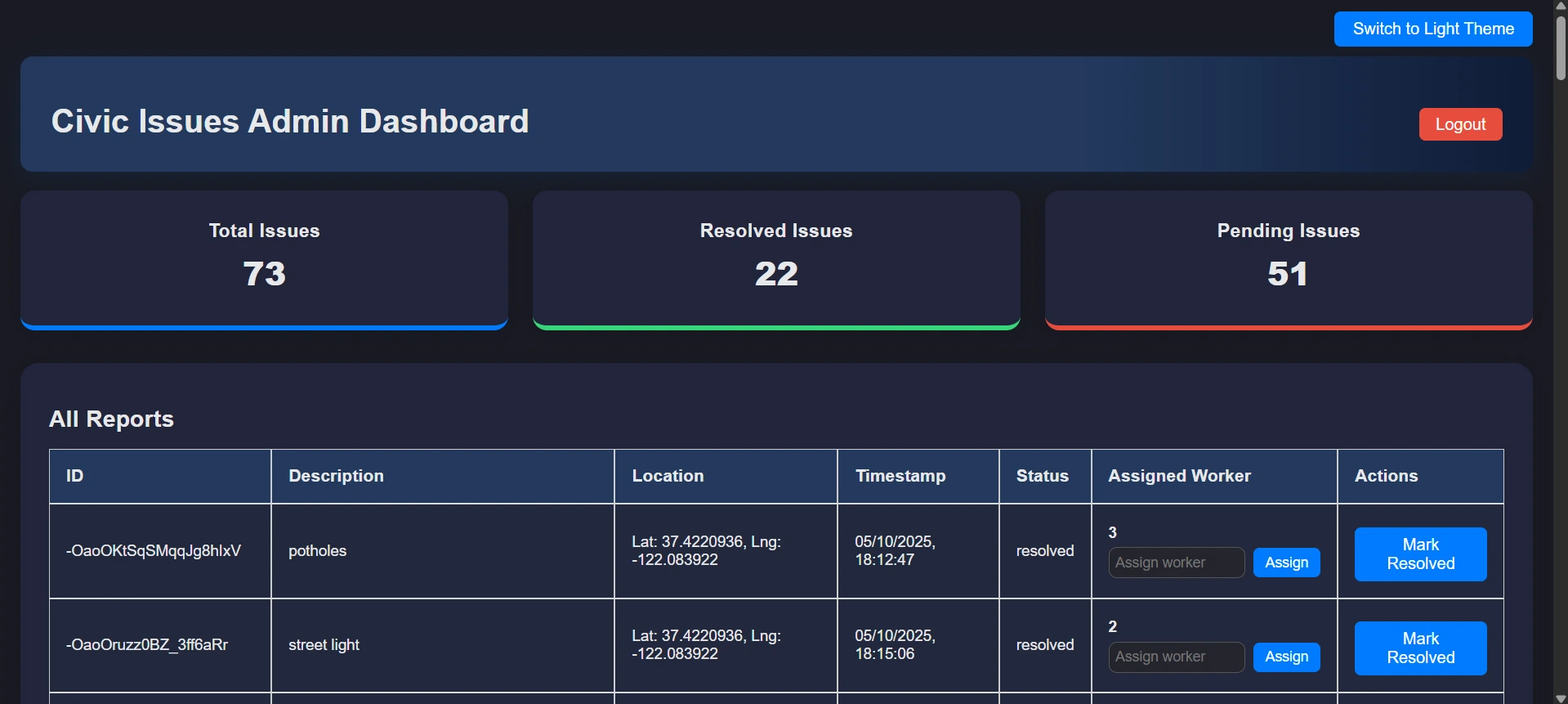
Issue tracking dashboard

Issue Visibility Dashboard

View problem status and public accountability across submitted civic issues.

  • Geo-Tagged Problem Reports: Capture location details so relevant authorities and citizens can understand where issues occur.
  • Live Status Updates: Track issue progress from raised to in-progress to resolved with real-time visibility.
  • Public Accountability: Support transparency by making civic concerns visible and understandable to the wider community.
  • Mobile-first UX: Designed for quick submission and visibility even in time-sensitive reporting situations.
  • Reporting Workflow: Streamline issue intake and action tracking from the first report through to completion.

Tools & Technologies

Mobile

AndroidJavaMaterial UILocation APIs

Backend & Data

FirebaseFirebase Realtime DatabaseCloud StorageAuthentication

Maps & Visibility

Maps IntegrationIssue Geo-TaggingStatus Tracking

Deployment

Firebase HostingAndroid BuildGitHub

Installation & Setup

# Clone the repository
git clone https://github.com/Samiksha-Lone/Civic-Issues-Tracker.git

# Open the project in Android Studio
# Ensure SDK tools and Android Gradle Plugin are installed

# Firebase setup
# 1. Create a Firebase project
# 2. Add Android app and download google-services.json
# 3. Enable Authentication, Firestore/Realtime Database, and Storage
# 4. Configure rules and project settings

# Run the app
# Build and launch through Android Studio or emulator

Community Impact

Localized Reporting

Issues became easier to locate and track, enabling quicker public awareness and faster local action.

Improved Transparency

Citizens gained clearer visibility into what had been reported, what was happening, and what progress existed.

Actionable Workflow

The reporting lifecycle created a more structured path from community concern to resolution tracking.